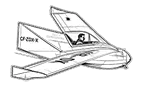
1. "Technika osiągania maksymalnych szybkości przelotowych szybowców", Witold Kasprzyk, Skrzydlata Polska, nr. 12/1938. Taktyka i technika przelotów szybowcowych na wiele lat przed Mac Cready'm.
2. "Nowe drogi w budowie szybowców", W. Kasprzyk
3. "Taktyka przelotu szybowcowego", W. Kasprzyk
4. "Technika przelotowa", W. Kasprzyk
6. "Polepszenie wyczynów szybowców w oparciu o nowe osiągnięcia aerodynamiki", W. Kasprzyk
7. "Szybownictwo", Humen, 1959r. str. 234-257. Analiza i zastosowanie praktyczne wzorów Kasprzyka opublikowanych w Skrzydlatej Polsce, nr. 12/1938.
8. "Wielka przygoda", Adam Zientek, MON 1957r. str. 99-116. Książka o charakterze wspominkowo-biograficznym.
9. "Rewelacyjne skrzydło W. Kasprzyka", Tadeusz Wusatowski, Technika Lotnicza i Astronautyczna, nr. 9/1974. W artykule opisano zjawiska, z którymi zetknął się Witold Kasprzyk w lotach na swoim szybowcu BKB-1 oraz praktyczne ich wyjaśnienie. Przedstawiono koncepcję supernośnego skrzydła i korzyści wynikające z jego zastosowania.
10. "Skrzydło W. Kasprzyka - wstępne badania tunelowe", Tadeusz Wusatowski, Technika Lotnicza i Astronautyczna, nr. 9/1975. Przebieg i wyniki pierwszych dmuchań cechującego się się dużą siłą nośną Kasper Wing przeprowadzone przez Daniela Woltona. Częściowe potwierdzenie teori W. Kasprzyka i błędy zastosowanej metody pomiarowej.
11. "Porty, palmy i Polacy", J. Wolniewicz, str. 210-214. Relacja autora ze spotkania z Kasprzykiem w USA.
12. "Skrzydlate wspomnienia", Witold Rychter, Wydawnictwo Komunikacji i Łączności, 1980 r. str. 335. Powrót z Rumunii samolotów RWD.
13. "Samoloty RWD", Leszek Dulęba, Andrzej Glass, Wydawnictwo Komunikacji i Łączności, 1983 r. str. 77. Zarys dziejów rozwoju konstrukcji samolotów SL i RWD oraz ich wytwórni w latach 1925-1939. Powrót z Rumunii 5 samolotów RWD (4 RWD-13 i 1 RWD-21) dzięki inicjatywie Witolda Kasprzyka. (1 RWD-13 i 1 RWD-21 znajdują się w zbiorach Muzeum Lotnictwa i Astronautyki w Krakowie)
14. "Polskie lotnictwo sportowe", T. 1, str. 137, 138, 140, 265.
15. "Ultralekkie szybowce i samoloty", Janusz Wojciechowski
17. "Witold Kasprzyk – Pionier Techniki Przelotu Szybowcowego", J. Gogała
18. "Wanda Modlibowska 1909-2001", L. Misiek, R. Górzenski, Poznan 2007 r., str. 44, 47, 48, 55
1. "Some Ideas of Vortex Lift", by Witold A. Kasper, Engineering Consultant, Society of Automotive Engineers, Inc., Warrendale, PA, Paper # 750547, no date, pp. 12. Abstract - In tests on a glider designed for experimenting with vortex generated lift, the authorxperienced an unknown phenomenon which kept the glider afloat at half the usual sink rate and stalling speed. After study it was realized that a huge vortex had been forming after the stall which explained the presence of additional lift at high angles of attack and low speeds. The implications that this discovery has in terms of improving the slow speed characteristics of airplanes are explained in the paper in addition to a detailed study of the characteristics of this vortex.
2. "A Wind Tunnel Investigation of the Kaper Vortex Concept", by Edward W. Kruppa, University of Washington, American Institute of Aeronautics and Astronautics, Inc., 1977, Paper # 115704, pp. 10. Abstract - A model of the Kasper vortex lift wing was constructed and tested in a small scale wind tunnel in an effort to verify the inventor's high lift and low drag predictions. Not one of the vortex configurations tested performed as well as a conventional clean airfoil. Flow visualization studies using tufts indicated fundamental differences from Kasper's predictions, including both the direction of vorticity and the number of vortices present.
4. "The Kasper Wing", Meheen Engineering, Witold A. Kasper, ed. H. Joe Meheen, 1979 - Currently av ailable technical data on the behavior of flying wings are fairly old, most of it dating back to the early 1930's. I am very grateful to my friend Witold Kasper that is willing and generous enough to share with aviation enthusiasts his discoveries of slow flight with safety. His explanations of controlled flight in deep stall by aerodynamic means and independent of forward speed, and his theory of stability are alone worthy of acceptance by the aeronautical community. Every student, every pilot and every aircraft designer will benefit from this. The road is now open for the advent of a safe air vehicle.
5. "Boy, I Don't Know", by Glayr Leitzke, Ultralight, date unknown, page 9. Personal account of the first flights in a Kasperwing ultralight at Cascade Ultralights in Issaquah, WA.
6. The Daily Mush, Newsletter of the Kasperwing Klub of America, Fairbanks, Alaska, April 1992, pp. 3.
7. Information Brochure, Cascade Ultralights, Inc., Fairfield, IA
8. "The World According to Kasper", by Thomas A. Horne, AOPA Pilot, May 1981, review of Kasper's work over the years.
9. "Remarkable L/D Achieved by Short-Span Tailless Sailplane", by Peter Bowers, Air Progress HOMEBUILT AIRCRAFT, Spring/Summer 1966, pp. 62-98. Canada's loss is our gain as one of the truly unique sailplane designs crossed the border to find a home near Seattle. A good deal of the technical info that has been collected on Kasper's BKB-1 will be of interest to all amateur designers. AP's N.W. editor tells how it flys.
10. "Flying the Vertical Mush", by Jan W. Steenbilk, GLIDER RIDER, June 1983, Short article on flying the Kasperwing in the mush mode. 11. United States Patent, # 3,438,597, April 15, 1969, W. A. Kasper Aircraft, Witold A. Kasper, Non-Powered Gliding Aircraft Specifications.
11. United States Patent, # 3438597, April 15, 1969, Aircraft, Inventor Witold A. Kasper
13. United States Patent, # 4,781,341, November 1, 1988, Flying Wing Aircraft, Inventor Witold A. Kasper
14. "The Revolutionary Kasper Wing", by Jack Cox, SPORT AVIATION, July 1973, Article on the high-wing, single-place, all-metal powered flying wing.
15. "Flight Testing the Bekas N", by Witold Kasper, Soaring, November 1969,
16. "What Happened to the Kasper Wing?", by L. D. Sunderland, SPORT AVIATION, January 1976,
17. "An Antique Grand Champion Ultralight", by Mary Jones, SPORT AVIATION, January 1996, pp. 81-84. Steve Pinkham's Kasperwing celebrates ultralighting's early days.
18. Several pages of general discussion about Kasper's aircraft capabilities and related stories. Contributors included Russell Lee of the Smithsonian, Al Bowers of NASA Dryden, and Jan Hinote.
19. "Obituaries", SPORT AVIATION, April 1995
20. "General Information on the Kasper Flying Wing"
21. "KASPAIR-200" Preliminary Specifications
22. "Comparison of design features and technical data of the Horten IV and BKB-1", by D. George-Falvy
23. "Tailles Aircraft", by K, Nickel, M. Wohlfahrt, 1990 pp. 213 24.
24. "Redemption at Issauath", by T. Horne, AOPA Pilot, MAY 1981
25. "We need a safer Airpane!", by Horst W. Petzold
26. "Preliminary report on vortex generated lift", by Witold A. Kasper, 1969
27. "Kasper the friendly Wing", Ultralight Flying, April 1988, 28. "In reinventing the small airplane, les can be more", by J. W. Steenblik
28. "The Revolutionary Kasper Wing", Soaring, December 1973 by Jack Cox
29. "Kasper Wing Utilizes Vortex Principle And Can Revolutionize Air Craft Industry", by Horst W. Petzold
30. "BKB flight report no 2", by by H.C. Higins
31. "First flight of BKB-1 flying wing", by F.A. Geraldsen
32. "Flight test & evaluation of RC models of Kasper flying wings", by MOCK-UP Model Company
33. "BKB-1 draw", by S. K. Brochocki
34. "A new tailles sailplane BKB-1", by S. K. Brochocki, SWISS AERO-REVIEW, 1960/11
35. "The bird machine KASPERWING 180B", by Bill Cox, Ultralight Aircraft 8/1983
37. "Taking a retrospective view on the aviation history", W. Kasper
38. "Living with Inflation", L. Varosh
39. "Promotes Sefety and Efficiency", W. Kasper
40. "Flight experience with the Kasper BKB1 tailless glider", D. George-Falvy
41. "The chellenge of flying wing design", D. George-Falvy
42. "Polish resister, sister reunion here", R. Zahler
43. "Not a Stupid Fellow", by Peter Garrison, Flying Magazine October 2003
44. "Deep, Deep Stall", by Peter Garrison, Flying Magazine January 1992